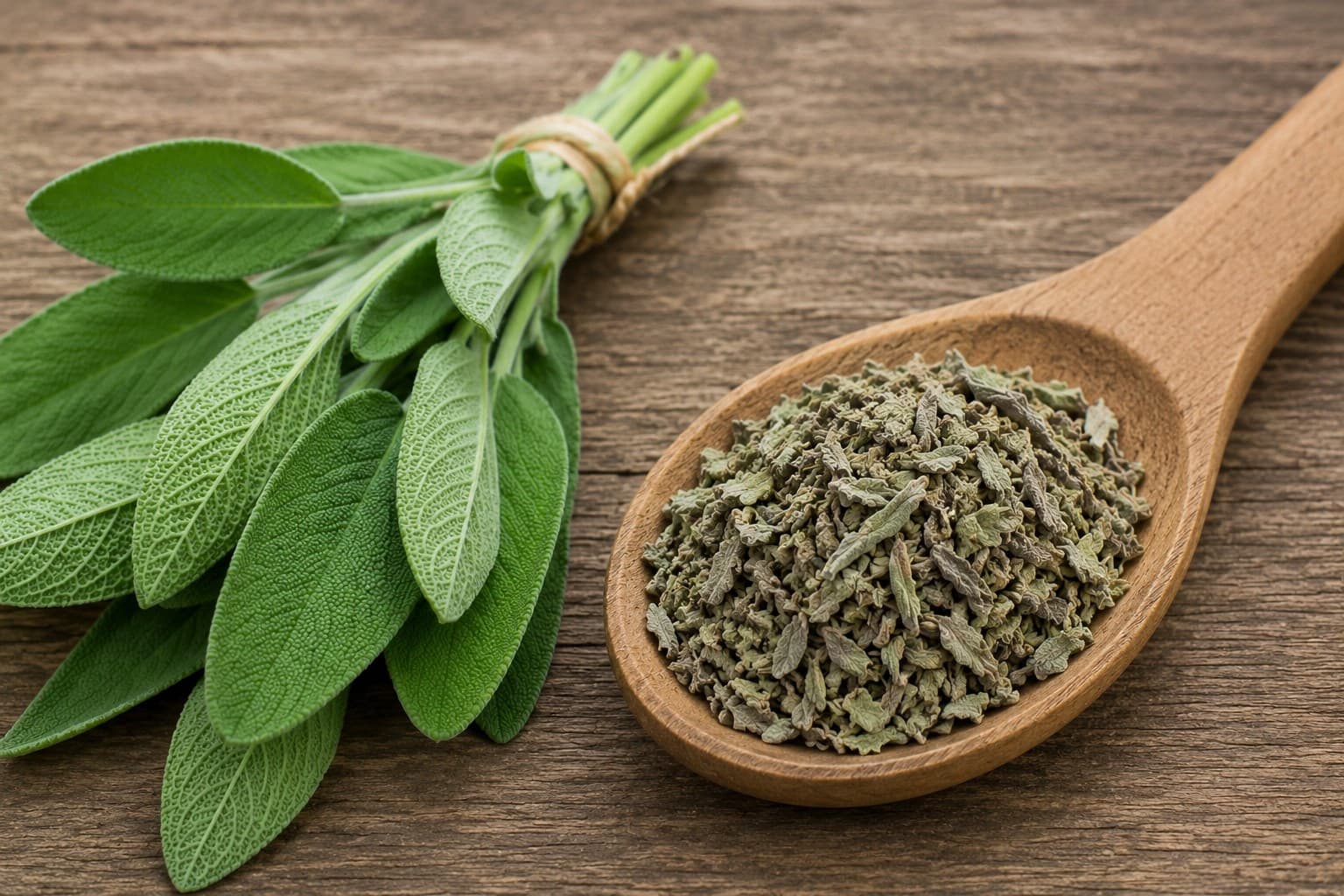
Sage is a herb with velvety leaves and a strong, slightly camphor-like and peppery taste, for pork, poultry, stuffing and pasta.
What does sage taste like?
Sage has a powerful aroma, slightly camphor-like, with a peppery edge. Used since ancient times, it is valued for its bold flavour as much as for its distinctive scent.
What to use sage with
Sage goes with white meat, poultry, pork, vegetables, pasta, stuffings and sauces. Its bold flavour adds depth to dishes and suits many Mediterranean recipes.
In Italy it flavours saltimbocca, veal escalopes with prosciutto, and the brown butter served with gnocchi or ravioli. In Britain, sage and onion stuffing is a classic with roast poultry.
How much to use
Sage should be used sparingly, as its flavour is intense: half a teaspoon is enough for a dish serving four. Crumble the leaves over the dish to release their aroma.
For a herbal tea, allow 5 to 10 minutes in simmering water: sage develops warm, herbal aromas.
How to store sage
Dried sage leaves keep in a closed bag, somewhere cool, dry and out of the light. We buy sage in large quantities and repack it into small bags, so its aroma is still lively when you open one.
Where to buy dried sage
Order it online, with delivery to a Mondial Relay pick-up point, or buy it at our markets in Provence: where to find us.
55 g pack: 3,00 € (54,55 € per kilo). Delivery in France to a Mondial Relay pick-up point from 4,90 €, free on orders of 100 € or more.
Going further
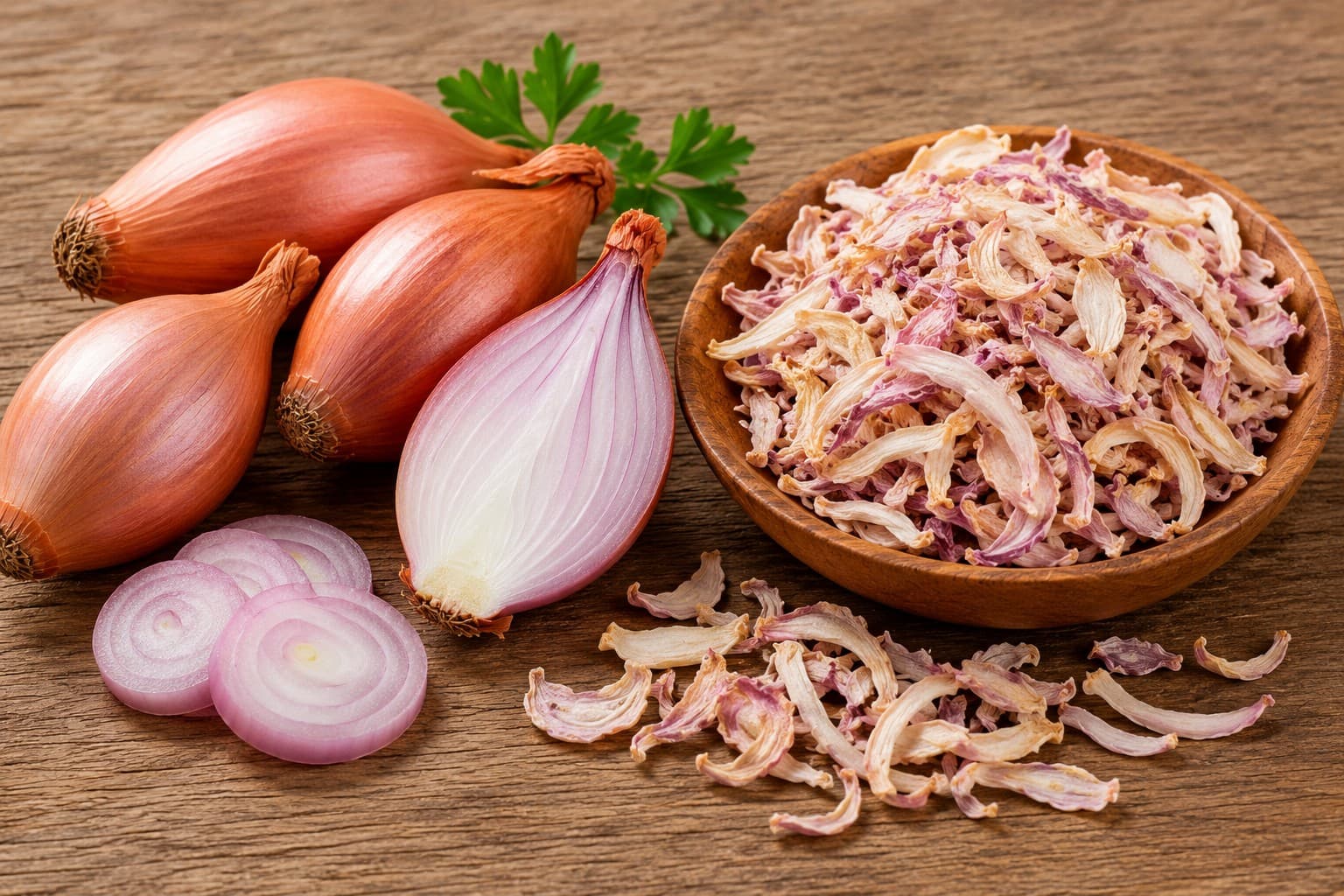
Rosemary and thyme share sage's strong flavour that holds up to cooking. With onion slices, sage makes an easy sage and onion stuffing.