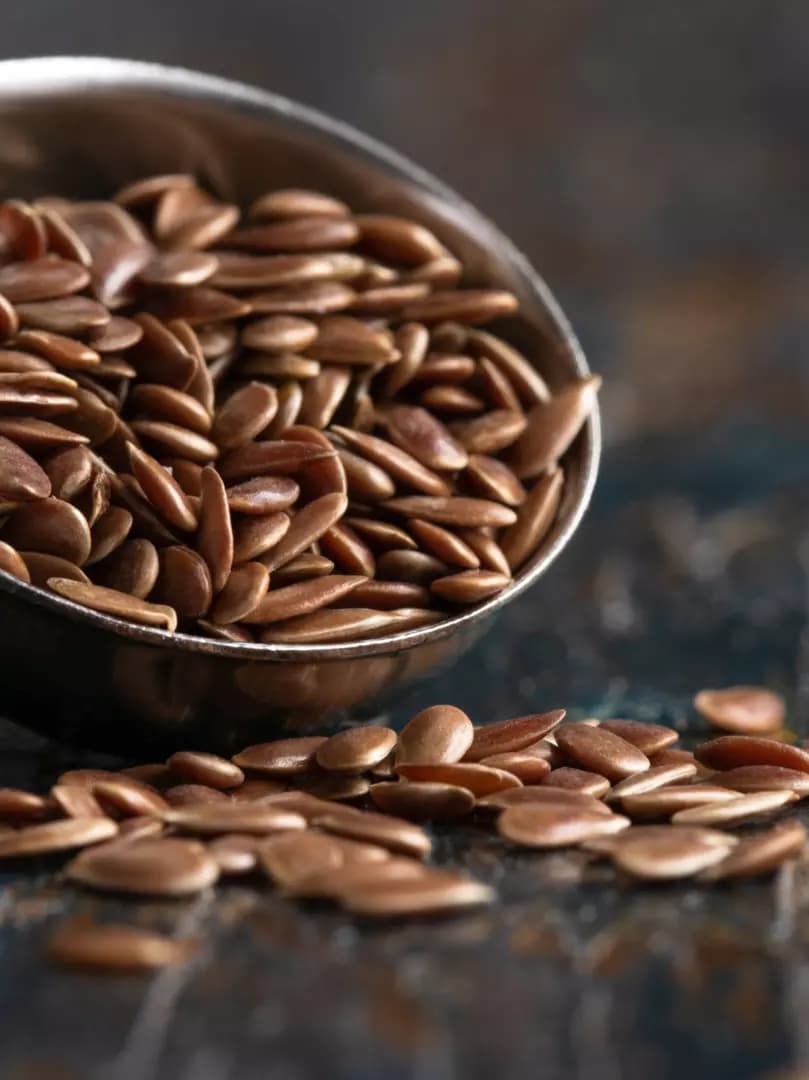
Linseed, or flaxseed, comes as small brown or golden seeds with a mild nutty taste, to eat whole or grind as a binder for baking.
Where does linseed come from?
Flax has been grown for thousands of years, for its fibre as well as its seeds. The small, flat seeds have a brown or golden sheen.
What does linseed taste like?
Linseed has a delicate, slightly nutty taste that blends into a recipe without changing it much. Whole, the seeds add crunch.
What to use linseed with
Linseed can be added to bread, biscuits, cereal, yoghurt, salads and smoothies. It also has a place in cake mixtures and crumbles.
How to use it
Whole linseed can be sprinkled over a salad or worked into bread dough. Ground, they act as a binder: mix one tablespoon of ground linseed with three tablespoons of water to replace an egg in a cake.
Grind them just before use, in a coffee grinder or a mortar: once ground, they quickly lose their freshness.
Linseed or chia seeds?
Linseed tastes nutty and is ground to bind a mixture. Chia seeds, almost tasteless, form a gel without grinding: they are the ones used for puddings.
How to store linseed
Keep the seeds whole in their tightly closed bag, somewhere cool, dry and out of daylight. We pack them into small bags from large volumes: a bag is soon finished, before the seeds can age.
Where to buy linseed
On our site, with delivery to a Mondial Relay pick-up point. Or at the market: our market days and locations are listed online.
50 g pack: 3,00 € (60,00 € per kilo). Delivery in France to a Mondial Relay pick-up point from 4,90 €, free on orders of 100 € or more.
Going further
On home-made bread, mix linseed with white sesame seeds and nigella seeds.
May contain traces of sesame, mustard, celery and gluten.